
· 4 min read
Kringloop shopping in the Netherlands: how Dutch thrift stores work
A practical guide to kringloopwinkels: what they are, which chains run them, how pricing and discount weeks work, and when to go if you want first pick.
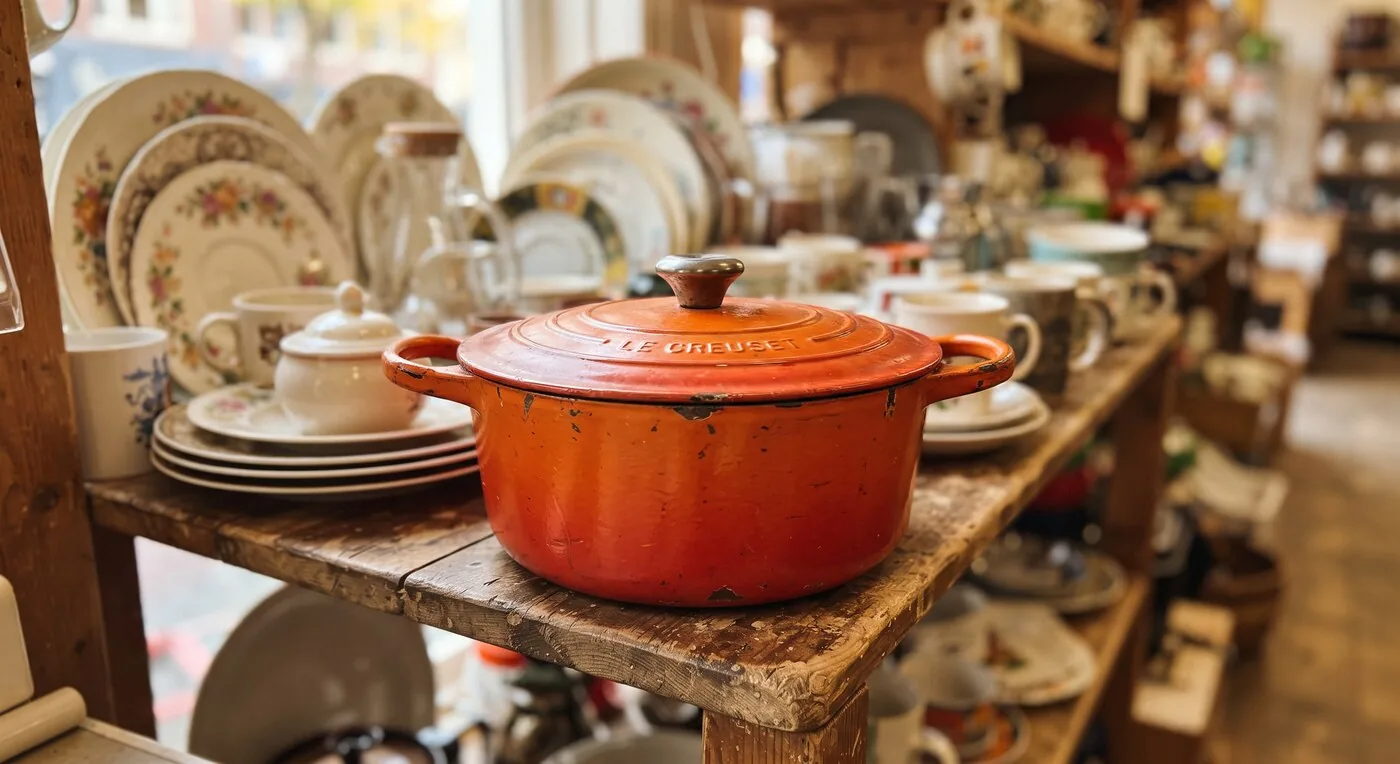
A kringloopwinkel is not a flea market, and it is not a vintage boutique. It is a permanent shop that sells things other people no longer wanted, usually to fund charity work or sheltered employment. Once you understand how they are run, the whole second-hand scene in the Netherlands stops looking like luck and starts looking like logistics.
What a kringloopwinkel actually is
"Kringloop" means cycle, as in a loop that closes. The name is literal: goods come in as donations, get sorted and priced, are sold cheaply, and the money goes back out into the organisation that runs the shop.
That has a few practical consequences you will notice on your first visit.
- Most shops are run by a charity or a social enterprise, not by a private seller. The staff are often volunteers or people in a work-experience placement.
- Stock is donated, so it is unpredictable. Nobody chose to put that particular teak sideboard there. It arrived.
- Prices are set centrally and are usually fixed. This is not a market where haggling is expected or welcome.
- Because the goods were free to the shop, the prices can be very low. A working lamp for three euros is normal.
The chains you will keep running into
Most of the shops in the Netherlands belong to one of a handful of organisations. Each has its own personality and its own pricing. Kringspot's own store list, which covers the country as of October 2026, shows how the map is split.
| Chain | Roughly how many shops in the Kringspot list | What to expect |
|---|---|---|
| RataPlan | about 50 | Big warehouse-style shops. Furniture, bikes, books, household. The best bet for large items. |
| Het Goed | about 34 | Well organised, well lit, sorted by category. Good clothing rails and a reliable furniture section. |
| Terre des Hommes | about 28 | Neat charity shops. Strong on clothing, toys and small homeware. |
| Dorcas | about 22 | Charity shops with a wide general mix, often in smaller towns. |
| ReShare Store | about 15 | The Salvation Army's textile-focused format. Clothing, shoes, and sorted-by-colour rails. |
| Emmaus | about 12 | Run by residential communities. Eclectic, sometimes genuinely odd, often rewarding. |
Beyond the chains there are hundreds of independent shops, often named after the town or the neighbourhood: Kringloop West, De Buurtkringloop, Kringloopcentrum something. Those are where the surprises live.
How pricing works
Three pricing systems are worth knowing before you walk in.
- Fixed price. The default. A sticker or a written price, no negotiation. Asking for a discount in a charity shop is generally seen as missing the point.
- Colour-tag weeks. Many shops run a rolling discount: this week anything with a red tag is half price, next week blue. If you are patient and the item is unpopular, waiting a week can halve the price. If you are not patient, someone else buys it.
- Kilo stores. A few shops, including kilo-format shops in the bigger cities, charge by weight. You fill a bag, they weigh it, you pay per kilo. Excellent for clothing, poor for a bookcase.
When to go
Restocking is the whole game. Shops receive donations continuously but sort them in batches, so the shelves change in bursts rather than steadily.
- Weekday mornings are the best combination of fresh stock and few people.
- Monday and Tuesday often follow a weekend of donations, so the sorting backlog is largest.
- Saturday afternoon is the worst time to find anything: picked over, and busy.
- Sale weeks are worth watching, but the good items tend to go in the first day.
Etiquette, briefly
Do not haggle. Do not move things you are not buying into a hidden corner as a "maybe" pile. Do test electronics if there is a socket, and ask if there is not. Keep an eye on children near glassware. Bring your own bag, because most shops charge for one. Card payment is now common but cash still sometimes helps in the smaller shops.
How to stop missing the good stuff
Here is the honest problem with kringloop shopping: the stock is local and perishable. Something excellent can be on a shelf in a shop you never visit, and gone by the afternoon. Regulars solve this by going constantly. The rest of us cannot.
That is the problem Kringspot exists for. You describe what you are hunting for in your own words, and when someone else spots it in a shop near you, you get a notification with the photo and the shop. You still have to walk there and pay the shop yourself, which is exactly the point. There is nothing to buy in the app.
If you want to start with the shops themselves, Kringspot ships with every kringloop and second-hand shop we could verify on a map: 976 of them, in 389 Dutch towns and cities, each geocoded to the front door.